As we celebrate the 36th anniversary of the Americans with Disabilities Act, we’re reviewing some of the history on how it came to be, its progress since inception, and issues we should pursue to further improve the lives of people with disabilities.
We’ve passed an important law in Massachusetts, but I’m finding it hard to celebrate.
After years of effort, disability advocates have finally won the fight to eliminate archaic and offensive language from our state laws. The words “mentally retarded,” once used as a medical diagnosis but now considered a slur, no longer appear in the laws of Massachusetts. The words “hearing impaired” have been replaced by the more accurate and less biased “deaf or hard of hearing,” and language has been changed throughout the laws to replace the phrase “handicapped person” with “person with disabilities.”
Today is May the Fourth, and for many sci-fi fans it is a humorous reminder of our connection to the Force. May the Fourth be with you. So, let’s connect.
As the Safeguard American Voter Eligibility (SAVE) Act is being taken up by Congress, there are many provisions in the bill that people must be aware about when it comes to this bill and its impact on voting rights, especially for people with disabilities.
This week I’ve been thinking a lot about Wael Tarabishi. He was a member of our disabled community in Texas, and he passed away on January 23rd at the age of 30. His father, Maher, was his primary caretaker and had been for many years. In October, Maher was detained by ICE during a scheduled check-in.
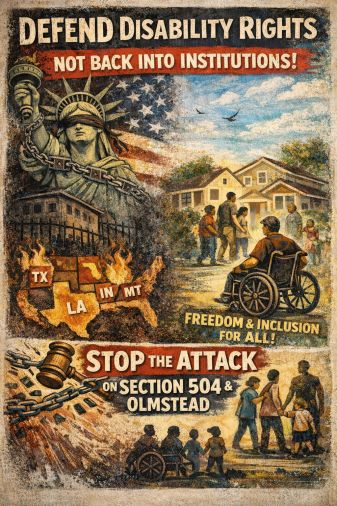
ALERT: Do you know anyone who lives in Texas, Alaska, Florida, Indiana, Kansas, Louisiana, Missouri, Montana, or South Dakota?
If so, please ask them to get in contact with their governor and attorney general. These states are plaintiffs in a lawsuit attacking Section 504 of the Rehabilitation Act and the integration mandate. The integration mandate states that people with disabilities should be supported in the community, rather than being relegated to institutions.