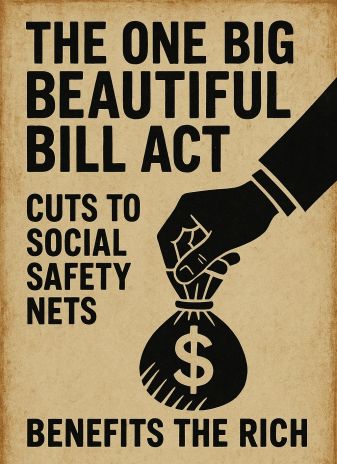
The official title of the Reconciliation Bill at the top of today’s news is “The One Big Beautiful Bill Act.” However, there are few to no beautiful things in this bill. It contains historic cuts to social safety nets, all to benefit the rich. The bill is long, complex, and difficult to read and understand. I’ll cover some of the major concerns I have with this bill, but they’re far from my only concerns.
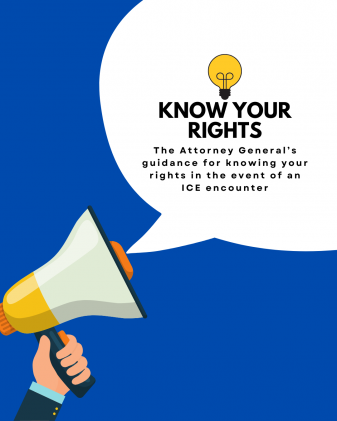
When this document crossed my desk, I immediately thought it would be wise to bring a copy to our receptionists, who requested I go through it with them. I was more than happy to do so, and amazingly this quickly snowballed into doing several trainings for staff at multiple locations.
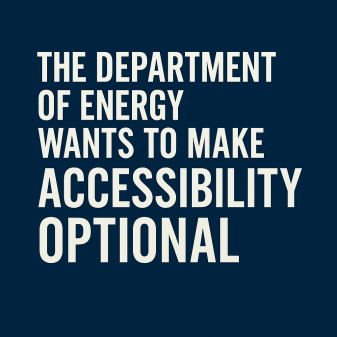
The Department of Energy has released a new rule, “Rescinding New Construction Requirements Related to Nondiscrimination in Federally Assisted Programs or Activities.” This new rule is open to public comment until June 16th, at https://www.regulations.gov/document/DOE-HQ-2025-0015-0001 This new rule states that § 1040.73 New construction is unnecessary due to the presence of § 1040.71 Discrimination prohibited. The new rule considers § 1040.73 to be “unnecessary and unduly burdensome.” Let’s take a look at both sections.
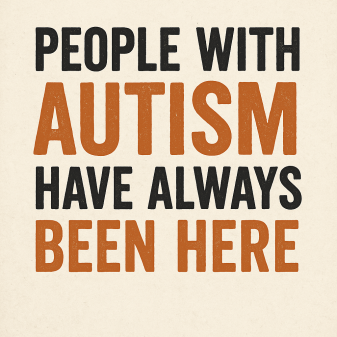
One thing that always strikes me in modern conversations about autism is the misconception that there are more people with autism now than there used to be. This is a classic fallacy, because only through a focus on diagnosis and early screening have we seen these rates begin to rise. An increased rate of diagnosis does not equate to increased incidence. People with autism and neurodivergent people have always been here; we just didn’t have the means to identify them, and offer our support. Many people have suffered in silence as round pegs crammed into square holes, expected to fit into a neurotypical world with specific societal expectations.
- Rachael Cowan is a Systems Change Advocate at Stavros Center for Independent Living. She holds a BA in Medical Ethics and Disability Justice from Hampshire College and has worked in the disability field for over 10 years.
People often think of disability as something that happens to others, when in reality, most of us will become disabled at some point.
- Rachael Cowan is a Systems Change Advocate at Stavros Center for Independent Living. She holds a BA in Medical Ethics and Disability Justice from Hampshire College and has worked in the disability field for over 10 years.
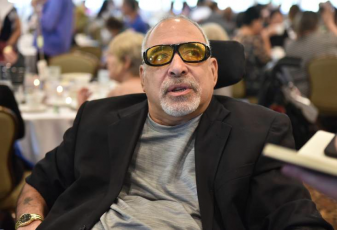
As we take this blog into its next generation, we remember fondly Joe Tringali. Joe worked at Stavros for over 40 years, and was a passionate advocate who fought for equal access for all in the disability community.